TECHNICAL INSIGHT
How to Prevent Door Denting Without Compromising Perceived Quality
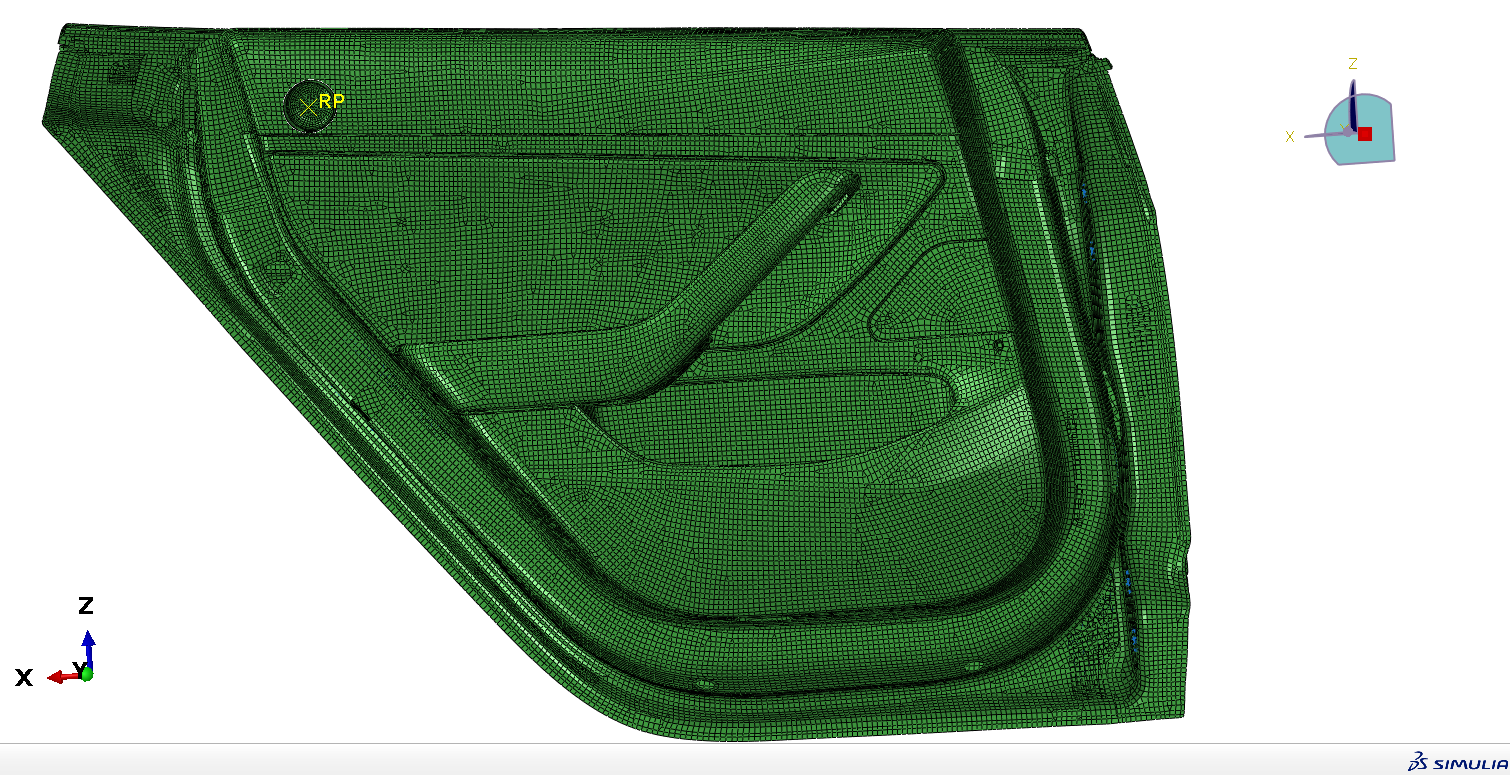
Car doors constantly face local impacts such as hand pressure or hail. To support perceived quality without simply adding heavier materials, door denting simulation is an essential engineering step.
What is door denting simulation?
Door denting simulation is a CAE analysis that evaluates the mechanical response of an automotive door outer panel under local force. It predicts panel stiffness and permanent dents, helping engineers assess perceived quality while balancing appearance and weight.
A 4-step CAE workflow for door denting analysis
1. Pre-processing
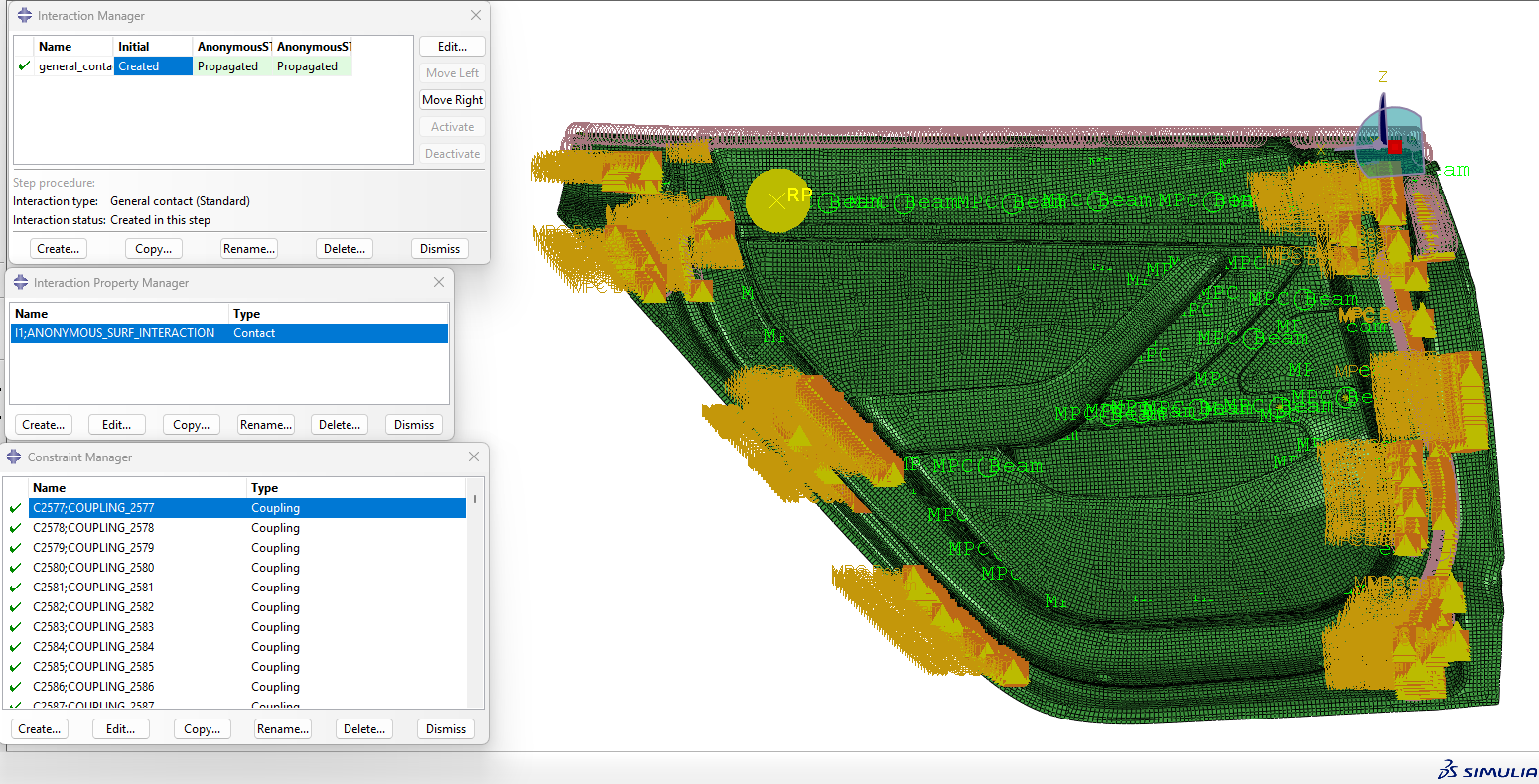
Build the FE model for the door assembly. Focus on fine meshing at the impact zone and accurately defining connections, including spot welds and mastic adhesives, between the outer panel, inner panel, and reinforcements.
2. Solver setup
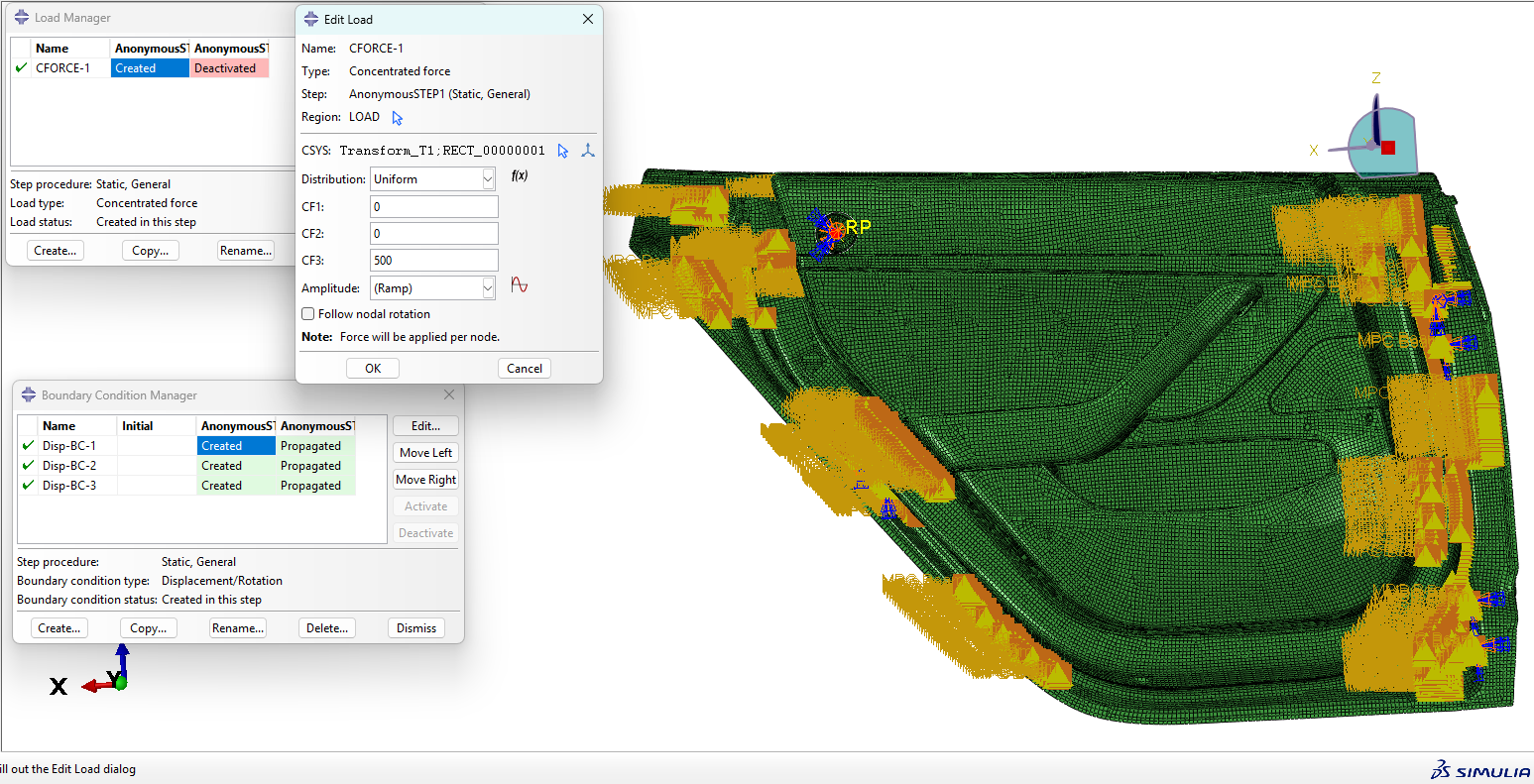
Constrain the door at its hinges and latch. Configure the rigid denting tool, usually spherical, and explicitly define the load and unload steps in the solver input file (.inp).
3. Post-processing
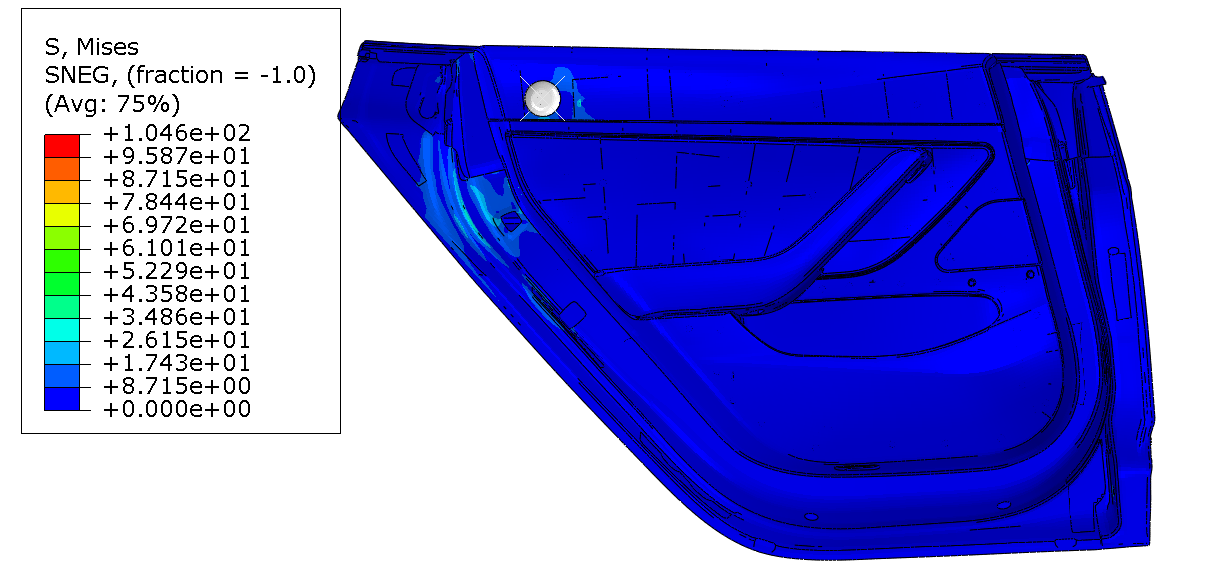
Run a nonlinear static analysis to evaluate key metrics: equivalent plastic strain (PEEQ), maximum deflection, and the load-displacement curve at the impact point.
4. Proposals
If the permanent dent exceeds the applicable OEM criteria, engineers can propose optimizations such as adjusting anti-flutter adhesives, redesigning feature lines, or modifying local thickness.
Why simulate door denting early?
Simulation helps identify structural weaknesses early and supports a balance between aesthetics, weight reduction, and the intended user experience.
A question for CAE engineers
How do you handle convergence issues during the unload step to achieve the most accurate permanent dent results? Let’s discuss.