TECHNICAL INSIGHT
Door Slam Analysis: What Happens When a Car Door Closes?
Door Slam analysis uses Abaqus Explicit to evaluate impact, contact, transient stress, vibration and energy transfer during vehicle door closing, supporting durability and perceived-quality decisions.
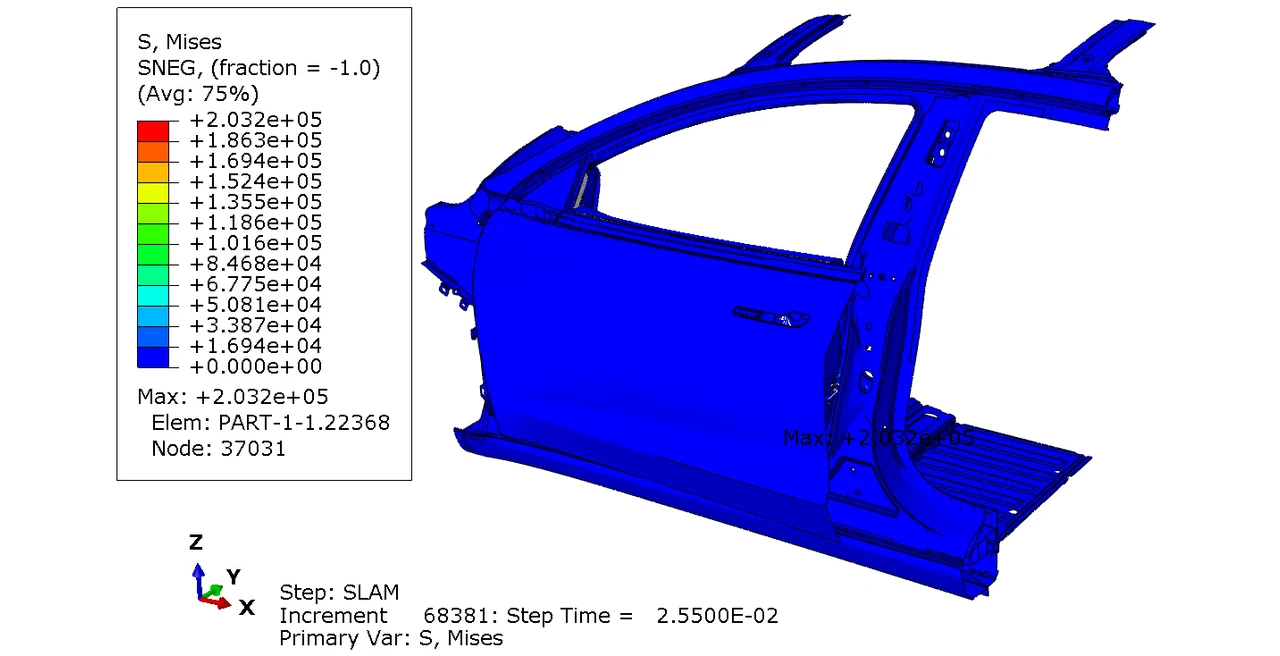
Door slam analysis is a transient CAE simulation of the impact, contact, vibration and stress-wave propagation that occur when a vehicle door closes. It helps engineers evaluate how kinetic energy travels through the latch and body structure, where transient stresses develop and how structural stiffness affects durability and customer-perceived closing quality.
What happens during a door slam?
Closing a car door appears simple, but the structure experiences a short-duration dynamic event. The moving door contacts the latch, transfers energy into the surrounding body structure and generates vibration and stress waves within a fraction of a second.
Key engineering questions in a Door Slam analysis
- How is the door’s kinetic energy transferred through the latch system?
- Where do the highest transient stresses occur?
- How does structural stiffness affect door-closing quality?
- How can engineers balance lightweight design with durability?
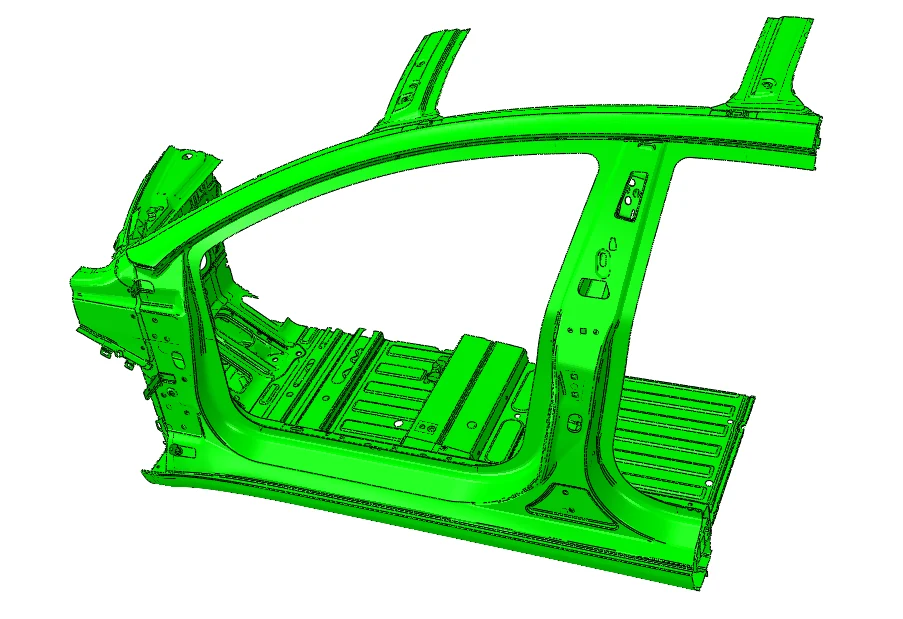
What does Abaqus Explicit capture?
Abaqus Explicit can simulate the complete door-closing event and track the structural response over time. The analysis can be used to review displacement, acceleration, stress distribution and energy evolution throughout the model.
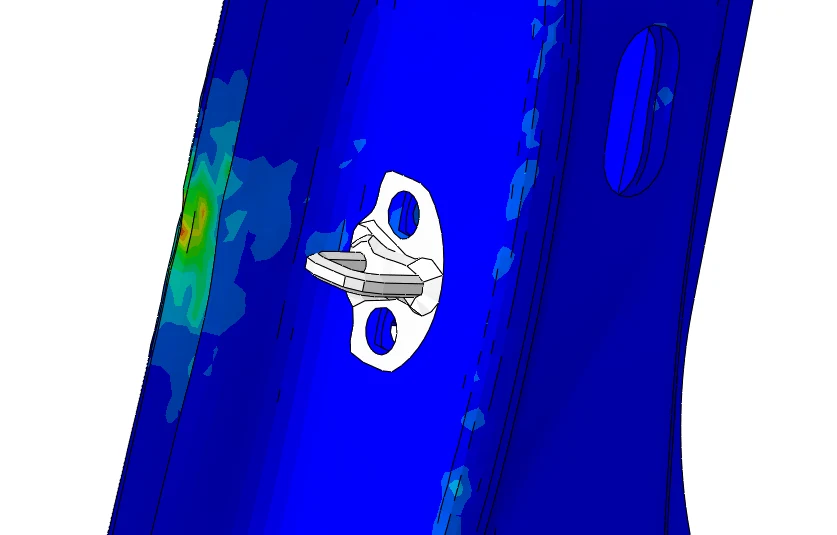
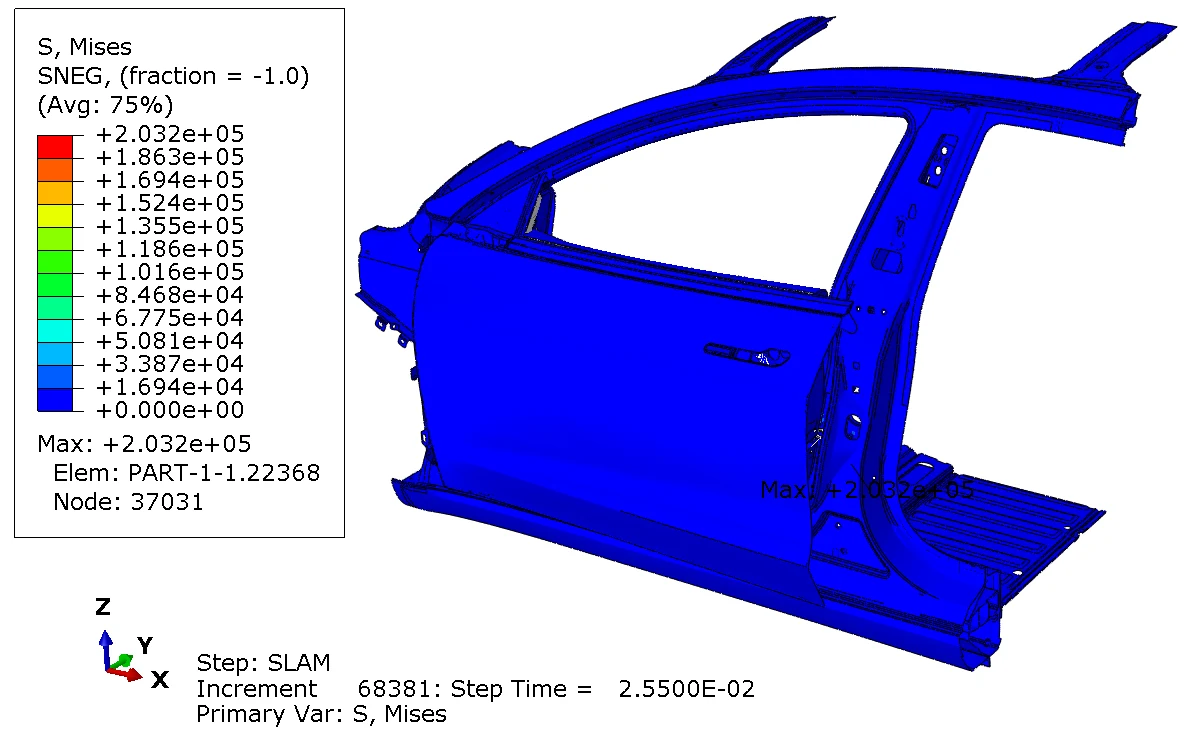
How do the results support vehicle development?
Door Slam analysis is more than a check that the door closes. It supports engineering decisions related to structural stiffness, durability, vibration behaviour and perceived quality.
- Locate transient stress concentrations around the latch and adjacent structure.
- Review displacement and acceleration during the closing event.
- Understand how energy is transferred and dissipated through the body structure.
- Evaluate design changes intended to improve durability, weight and closing quality.
Simulation video
Watch the Door Slam simulation video on YouTube.
Frequently asked questions
Why does every car door produce a different closing sound?
The closing response depends on how the door and body structure transfer impact energy, how the latch contacts its surrounding parts and how the structure vibrates. Differences in stiffness, mass distribution, contact behaviour and damping can therefore change both the sound and the perceived quality of the closing event.
What should engineers review in a Door Slam simulation?
Engineers should review transient stress, displacement, acceleration and energy evolution together. This combined view shows where the structure is highly loaded, how it moves during impact and whether the model transfers and dissipates energy in a physically meaningful way.
Key takeaway
Door Slam simulation connects structural performance with durability and customer-perceived quality during a highly dynamic event. Explore Leanos Automotive R&D services or discuss an Abaqus Explicit problem with our engineering team.